

Quick answer
The best snorkeling in Maui for non swimmers happens at Wailea Beach's southern crescent, where a gradual sandy slope extends 30 to 40 feet before reaching the reef edge at chest depth. Non-swimmers can wade along the shore break in knee-to-waist water while observing tropical fish over the sand bottom, keeping both feet planted throughout. Alternatively, the rocky point at the beach's north end offers immediate shallow-reef access in 2 to 3 feet of water, though entry requires careful footing over lava rock.
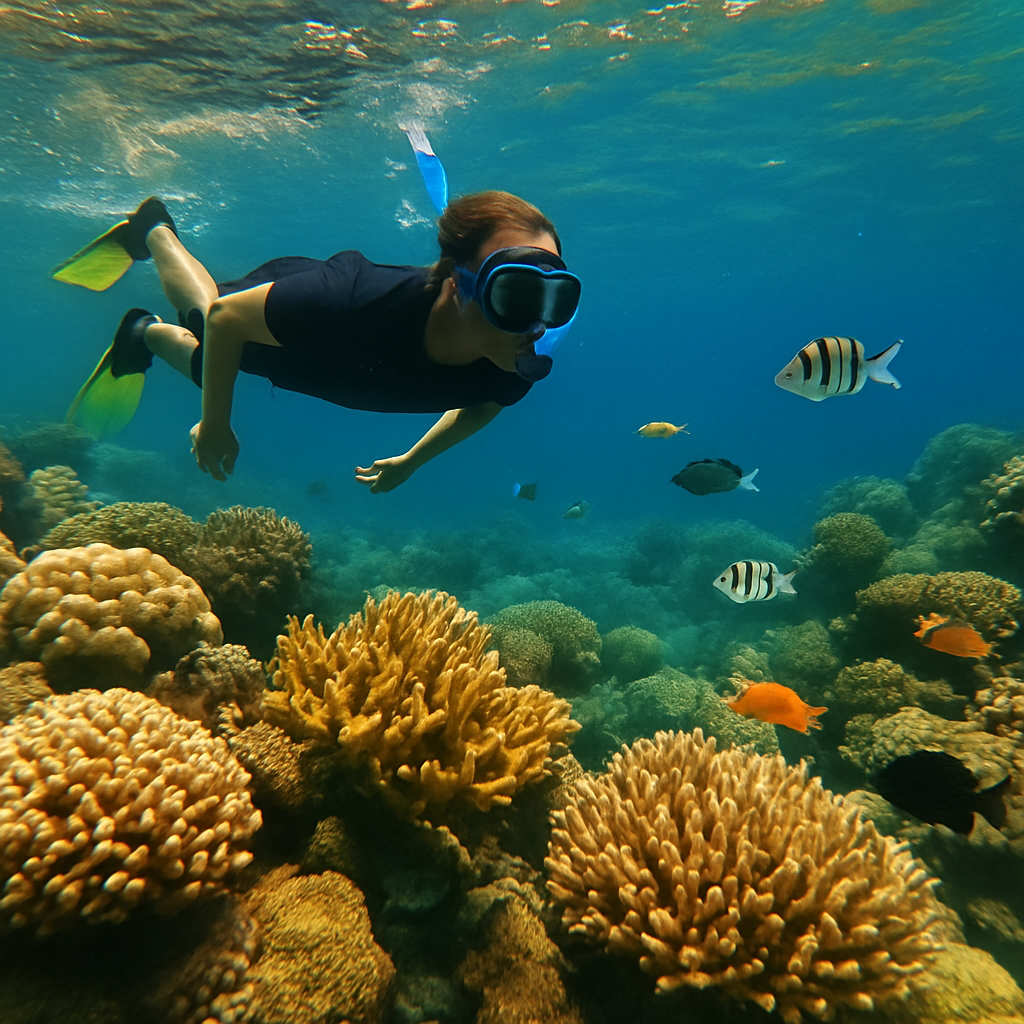
Wailea Beach holds two distinct snorkeling zones, and the safest choice for a non-swimmer depends entirely on whether you prioritize gradual depth control or immediate marine life access. The 0.8-mile crescent of golden sand creates a natural lagoon effect during morning hours, when offshore winds have not yet built and the South Maui swell stays small. Water clarity here reaches 60 to 80 feet on calm days, and the sandy bottom reflects sunlight upward, making it easy to judge depth visually. The southern beach entry provides the gentlest grade. You walk across firm sand for 30 feet in ankle-deep water, then another 30 feet as depth reaches your knees, and finally 40 more feet to reach waist depth where the first coral heads appear. At no point do you lose footing, and you can turn back instantly if conditions feel uncomfortable. Yellowfin goatfish and convict tangs feed over the sand in as little as one foot of water during early morning. The reef proper—where parrotfish, wrasses, and occasional green sea turtles appear—begins at chest depth roughly 100 feet from shore. Non-swimmers who stay in the sandy zone still encounter marine life without ever needing to float or tread water. The northern rocky point offers a different trade. Lava rock shelves extend from the shore into water that stays 2 to 3 feet deep for 20 feet out, then drops to 5 feet at the reef edge. You enter by stepping carefully across textured rock—water shoes are non-negotiable here—and within 10 feet you are surrounded by coral formations, damselfish, and occasional spotted eagle rays. The shallow reef plateau extends 40 feet before the bottom slopes to 8 feet. For non-swimmers, this means immediate access to reef ecosystems without needing to venture into deeper water, but it requires confidence moving over uneven surfaces and acceptance that you will be in waist-deep water from your first step. Both zones offer safe snorkeling for non swimmers in Maui, but your physical comfort with underwater footing determines which works better. If you need the psychological security of a slow, reversible depth gradient, the southern beach entry is the answer. If you want to see reef fish and coral immediately and are comfortable in waist-deep water with uneven footing, the northern point delivers that. Neither requires swimming ability, but both demand realistic assessment of your balance and comfort threshold before you commit to entry.
“Water clarity here reaches 60 to 80 feet on calm days, and the sandy bottom reflects sunlight upward, making it easy to judge depth visually.”
Best Snorkeling in Maui for Non Swimmers: Beach Entry vs. Shallow Reefs
Non-swimmers at Wailea Beach must decide between a gradual sandy beach entry and navigating toward the shallow reefs located near the rocky points. Understanding these methods helps in selecting a path that prioritizes stability and personal comfort levels.
|
Top pick Beach Entry Direct access from sand |
Shallow Reefs Navigating to rocky edges | |
|---|---|---|
| Entry ease | High stability on sand bottom | Moderate requiring rocky navigation |
| Water depth at entry | 0.0–0.5 meters | 0.5–1.5 meters |
| Physical exertion | Minimal effort | Moderate due to distance and depth |
| Confidence requirement | Low for standing | Higher for treading and reef awareness |
| Marine life proximity | Low to moderate | High near coral formations |
Verdict: Those prioritizing stability should utilize the beach entry, while those seeking closer marine life encounters should only proceed to the shallow reefs if they possess adequate water confidence.
Best Time for the Best Snorkeling in Maui for Non Swimmers at Wailea Beach
The best arrival window for non-swimmers is 07:00–09:00, as the water remains at its calmest during these early hours. Morning conditions provide the highest visibility and most stable surface for those less comfortable in the ocean.
Weekday mornings
Low crowd density—
The water is typically glass-like, offering maximum stability for inexperienced snorkelers. Early sessions minimize interactions with large groups.
Winter months (Dec–Feb)
High crowd densityHigh surf with 75-78°F
Winter conditions often bring increased swell, which can make entry and exit challenging for non-swimmers. Morning hours remain the only reliable time for calm water.
Shoulder Season (Apr/May, Sept/Oct)
Moderate crowd densityCalm seas with 78-82°F
These months offer the most consistent weather and water clarity. Early arrival ensures calm conditions before afternoon winds develop.
Verdict: For the safest experience, aim for an arrival between 07:00–09:00 during the months of April or October.
How to Reach the Best Snorkeling in Maui for Non Swimmers at Wailea Beach
Wailea Beach is located along Wailea Alanui Drive in Wailea, HI 96753, USA. The most direct approach is by car via the main thoroughfares connecting to the Wailea resort area.
Wailea Alanui Drive access via Piilani Highway (HI-31)
Direct drop-off at Wailea Alanui Drive public access points
Entrance Fees for the Best Snorkeling in Maui for Non Swimmers
Wailea Beach is a public beach with no costs associated with entry. All access to the shoreline and water remains free for the general public.
An adult pays 0 USD for entrance, as Wailea Beach is a public access area.
Opening Hours for Best Snorkeling in Maui for Non Swimmers
Wailea Beach is a public beach with access available at all times throughout the week. The area remains open for visitors continuously.
| Monday | 00:00–23:59 | |
|---|---|---|
| Tuesday | 00:00–23:59 | |
| Wednesday | 00:00–23:59 | |
| Thursday | 00:00–23:59 | |
| Friday | 00:00–23:59 | |
| Saturday | 00:00–23:59 | |
| Sunday | 00:00–23:59 |
Mistakes to Avoid for the Best Snorkeling in Maui for Non Swimmers
Non-swimmers face specific risks at Wailea Beach that experienced snorkelers might overlook. These mistakes can turn a safe morning into a dangerous situation.
Snorkeling alone without a buddy or flotation device
Always use a snorkel vest or flotation belt, even in shallow water. Bring a partner who can assist if you tire or need help returning to shore.
Entering the water when waves exceed two feet
Check surf conditions before entering—waves above two feet create strong currents that exhaust non-swimmers quickly. Wait for calmer morning conditions between 7:00–9:00 AM.
Swimming out too far before testing stamina in gear
Practice breathing through your snorkel in waist-deep water for five minutes before venturing deeper. Turn back immediately if you feel winded or uncomfortable.
Ignoring rip current warning signs posted at beach access
Rip currents pull swimmers offshore and are not always visible from the beach. If caught, swim parallel to shore until free of the current, then angle back to land.
Assuming all areas of Wailea Beach have the same depth
The southern end drops off more quickly than the gradual northern slope. Stay in the northern shallows where you can stand up at any point.
Check availability
Frequently asked questions about snorkeling at Wailea Beach
Everything you need to know about best snorkeling in maui for non swimmers